Charlottenburg
After two days of walking Berlin and absorbing the potently somber memorials and museums, I needed a couple of touristy days. Hope you enjoy coming along!
Our third day in Berlin began with a trip to Charlottenburg, a neighborhood that was the center of West Berlin and the place from which my grandmother boarded the train that would take her to Moscow and, eleven weeks later, to safety in Chile.
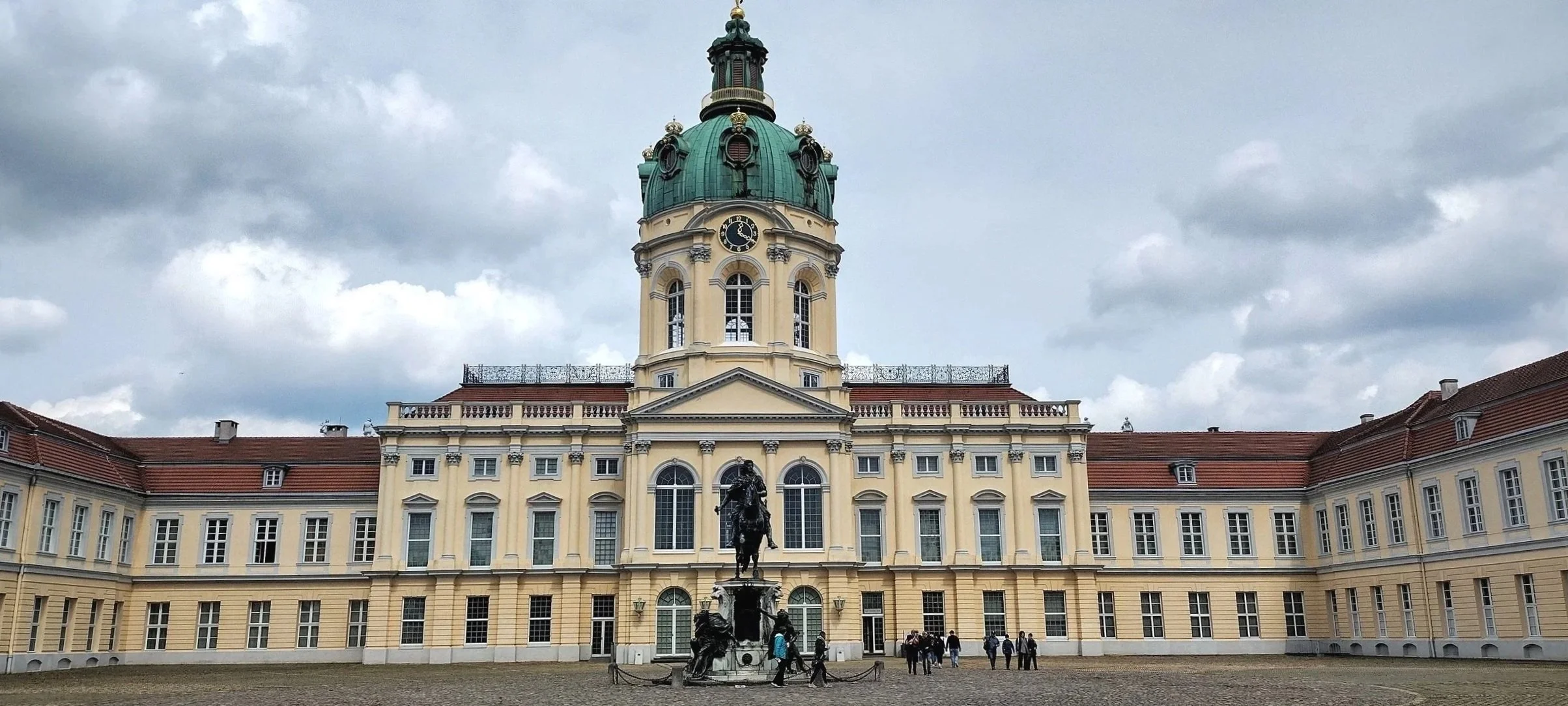
What drew us there was the massive baroque Charlottenburg Palace, which got its name from Sophie Charlotte, the first Queen Consort in Prussia. (In case you’re wondering, that’s a queen who is married to a reigning king but doesn’t have power herself.) It is here that I learned (late in life, I confess) the difference between a castle, with its fortifications, towers and moats, and a palace, built for luxury and prestige. Inhabited by royalty from the late 17th century to the late 19th century, the palace is overflowing with art and opulent beyond words.
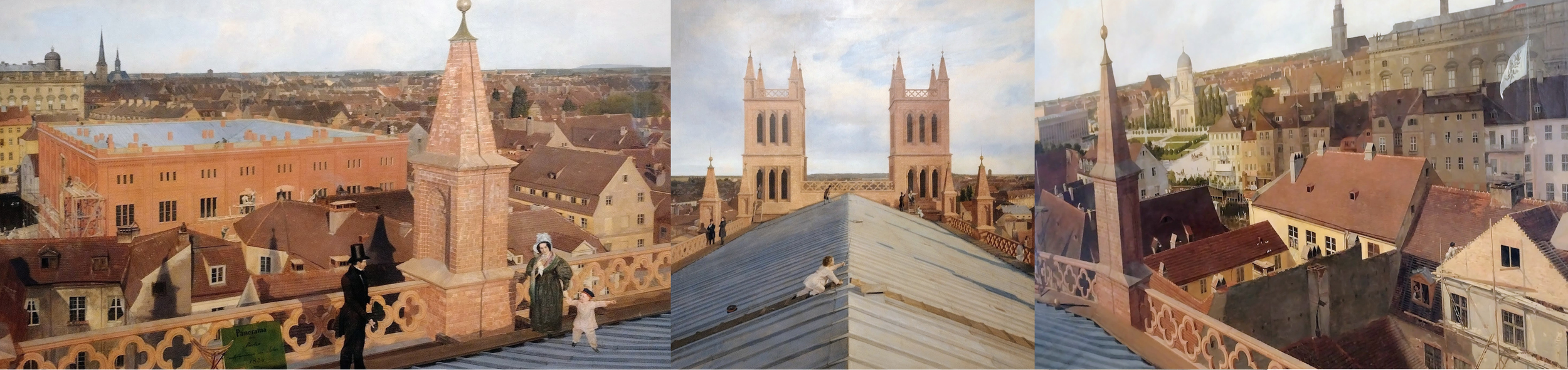
This stunning panorama by architectural painter Edward Gaertner depicts Berlin from the roof of a church and includes assorted portraits.
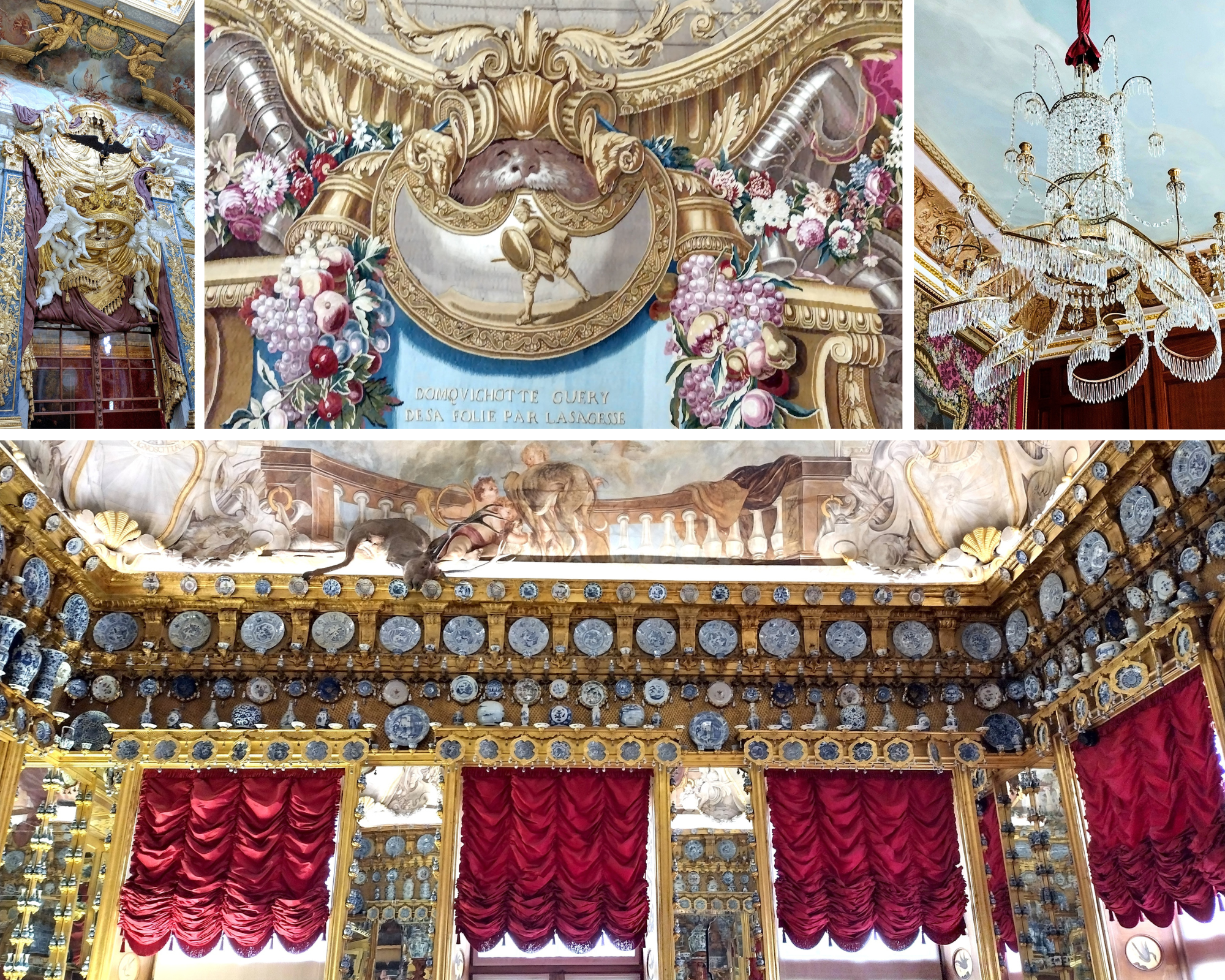
I’ll spare you the history of the German monarchs; suffice it to say, successive kings and queens left their mark. To be honest, some of the rooms are breathtaking in their decadence, taking conspicuous consumption to an almost revolting level. The walls of the Porcelain Chamber, completed in 1706 to showcase the wealth of King Frederick I, are covered with more than 2,000 pieces of Chinese and Japanese porcelain, all blue and white, highlighted by gilded frames and mirrors. Despite feeling a growing cynicism, the collection stopped me in my tracks. I appreciate that the art, architecture and history have been preserved, but…
After our palace wanderings, we roamed the neighborhood, passing by Rathaus Charlottenburg, the town hall built between 1899 and 1905, the year my mom was born. While seriously damaged in a 1943 air raid, it was magnificently restored in the 1960s.
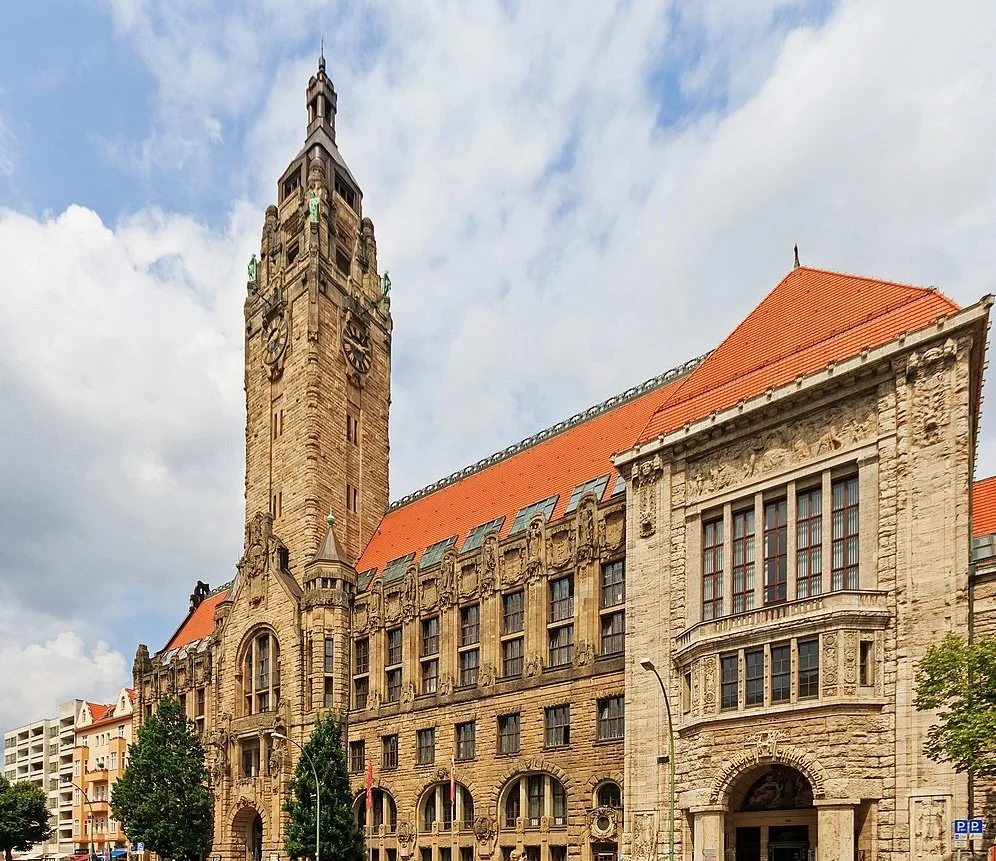
Charlottenburg’s restored city hall
We were heading towards Neni’s, a restaurant that our new friends, Kerstin and Frank, wanted to share with us. Nearby we encountered our first Berlin Buddy Bear, a life-sized fiberglass bear with uplifted arms and a welcoming smile. One of 500 scattered throughout the city, our bear buddy was illustrated with many of Berlin’s famous sites, but be sure to look at the legs, portraying Berliners enjoying life. These lighthearted sculptures are intended to be ambassadors, symbolizing peaceful coexistence between cultures and promoting dialogue. (If you’re curious, check out the individual buddy bears at this link.) The bear, I later noticed, is the symbol of Berlin, proudly displayed in the center of its flag.
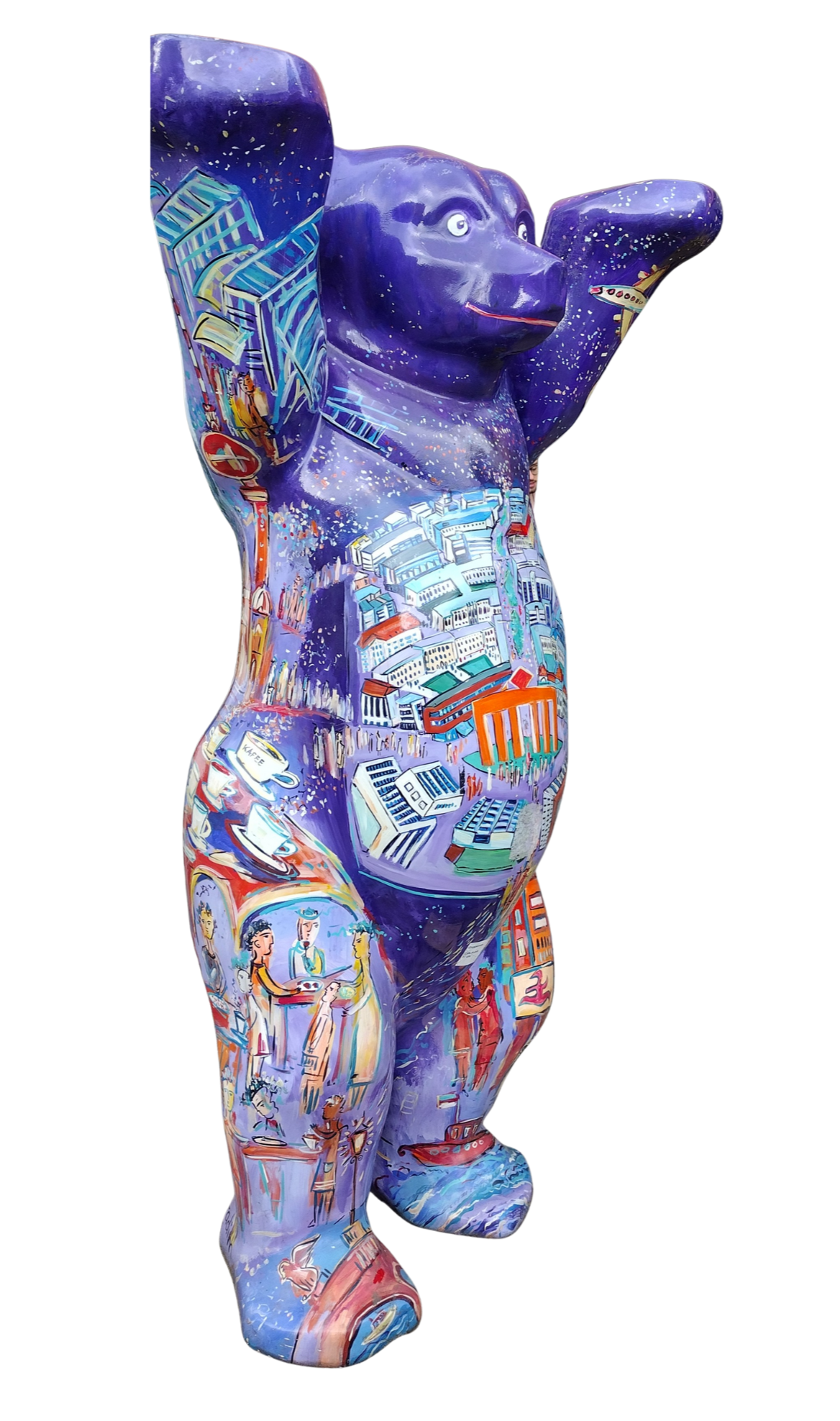
The Berlin Buddy Bear on display at Breitscheidplatz
On the edges of this plaza are concrete balls called bollards. Naively, I thought they were decorative, but later learned from Kerstin that they were installed as a security measure to prevent vehicle attacks like the one in 2016 that killed 12 people and injured dozens more during Berlin’s Christmas Market. The perpetrator was a Tunisian national whose asylum application had been rejected; the Islamic State claimed responsibility, having inspired the attack. Looking back at that sweet buddy bear, the irony was stark.
Steps away was Kaiser Wilhelm Memorial Church, notable for what was missing rather than what remained. The grand church was built between 1891 and 1895 by Kaiser Wilhelm II, Germany’s ruler during my parents’ growing-up years. He resigned after Germany’s defeat in World War 1, but his church is most notable for the destruction it suffered during World War 2. Its nave was burned and eventually razed, but its spire remained standing. Germans chose to leave the heavily damaged tower as a permanent reminder of the horrors of war. Inside the memorial hall, the stunning curved ceiling mosaic is testimony to its former glory. Even here, the Nazis’ horrific legacy left its mark: Over 40 Christians baptized in the parish were considered Jewish under the Nuremburg Laws; they were deported and murdered. The youngest was 8 years old, the oldest 79.
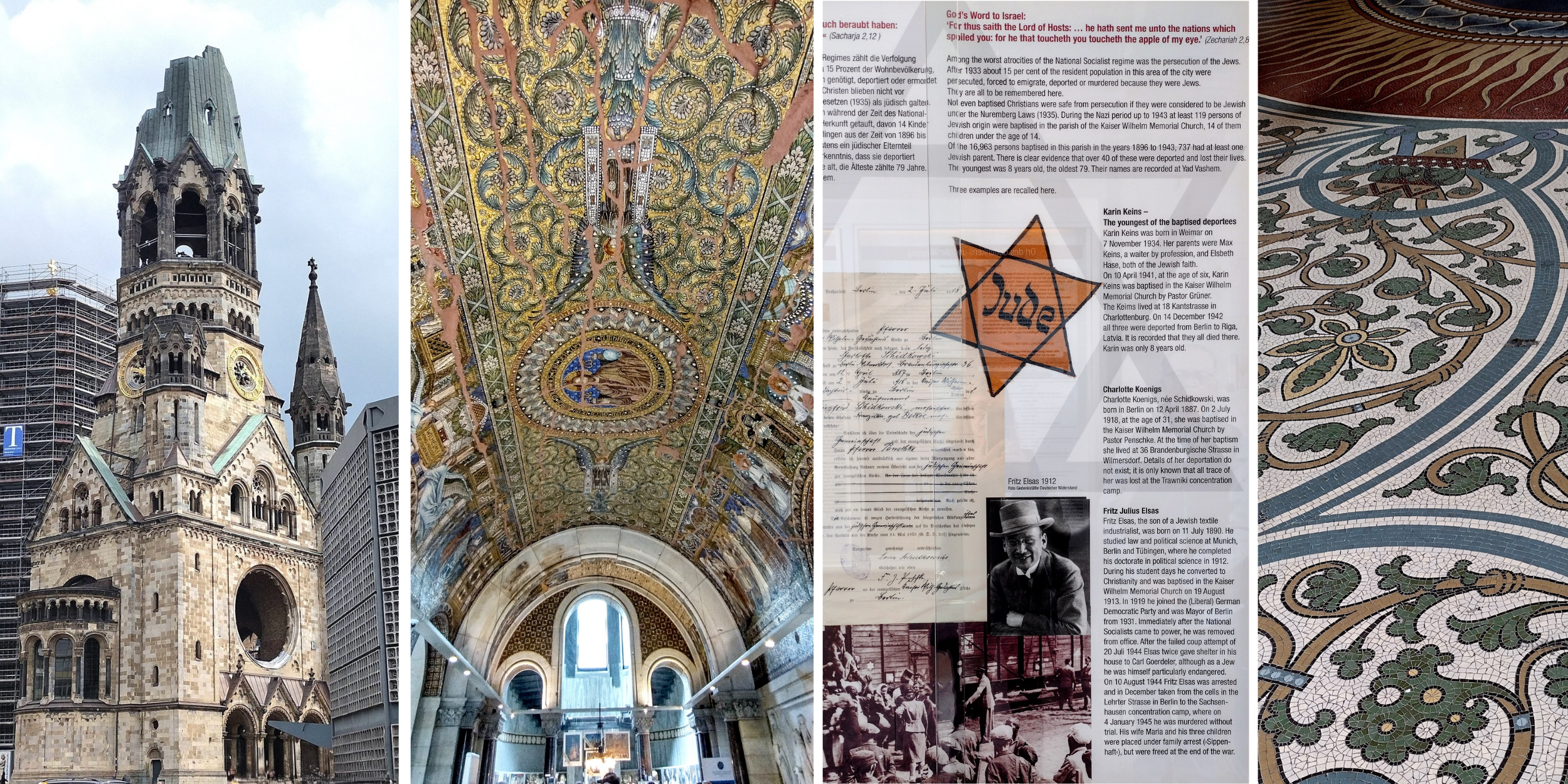
Kaiser Wilhelm Church was intentionally left in ruins to symbolize the horrors and destruction of war. Its small memorial commemorates parishioners not “Christian” enough to be spared execution.
Beside the ruins of the old church, a modern octagonal church was completed in 1961, offering a peaceful transition to better days and a stark contrast to the past. Its interior walls are covered with thousands of cobalt blue glass panels in the stunning color of France’s famous Chartres Cathedral.
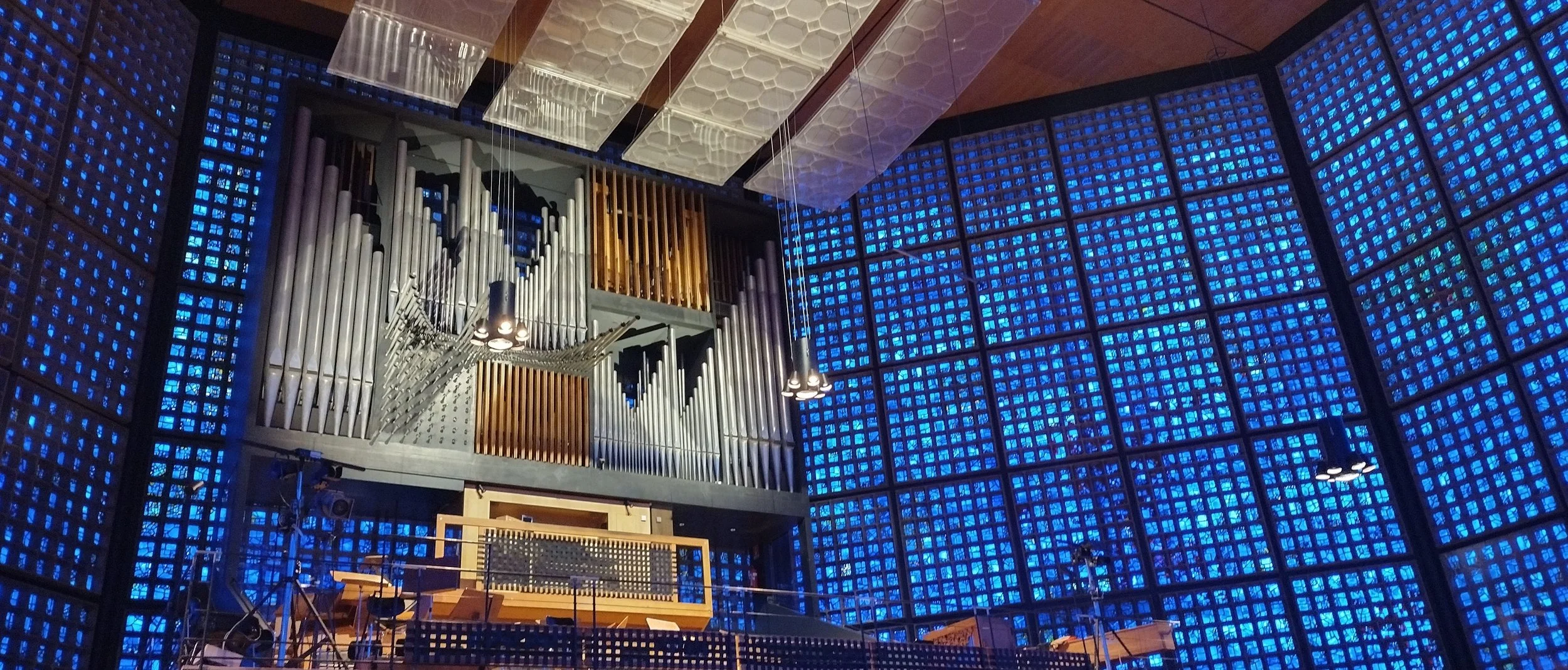
A look at the massive organ surrounded by brilliant blue glass mosaic walls at the new Kaiser Wilhelm Memorial Church.
Our dinner-time destination was just across the street atop the Bikini Haus building, a two-part 10-story high-rise (resembling a bikini, according to locals) now home to the urbane 25 Hours Hotel. After an artsy, industrial chic welcome, an elevator took us to the top floor and the light-filled, glass-enclosed restaurant called Neni.
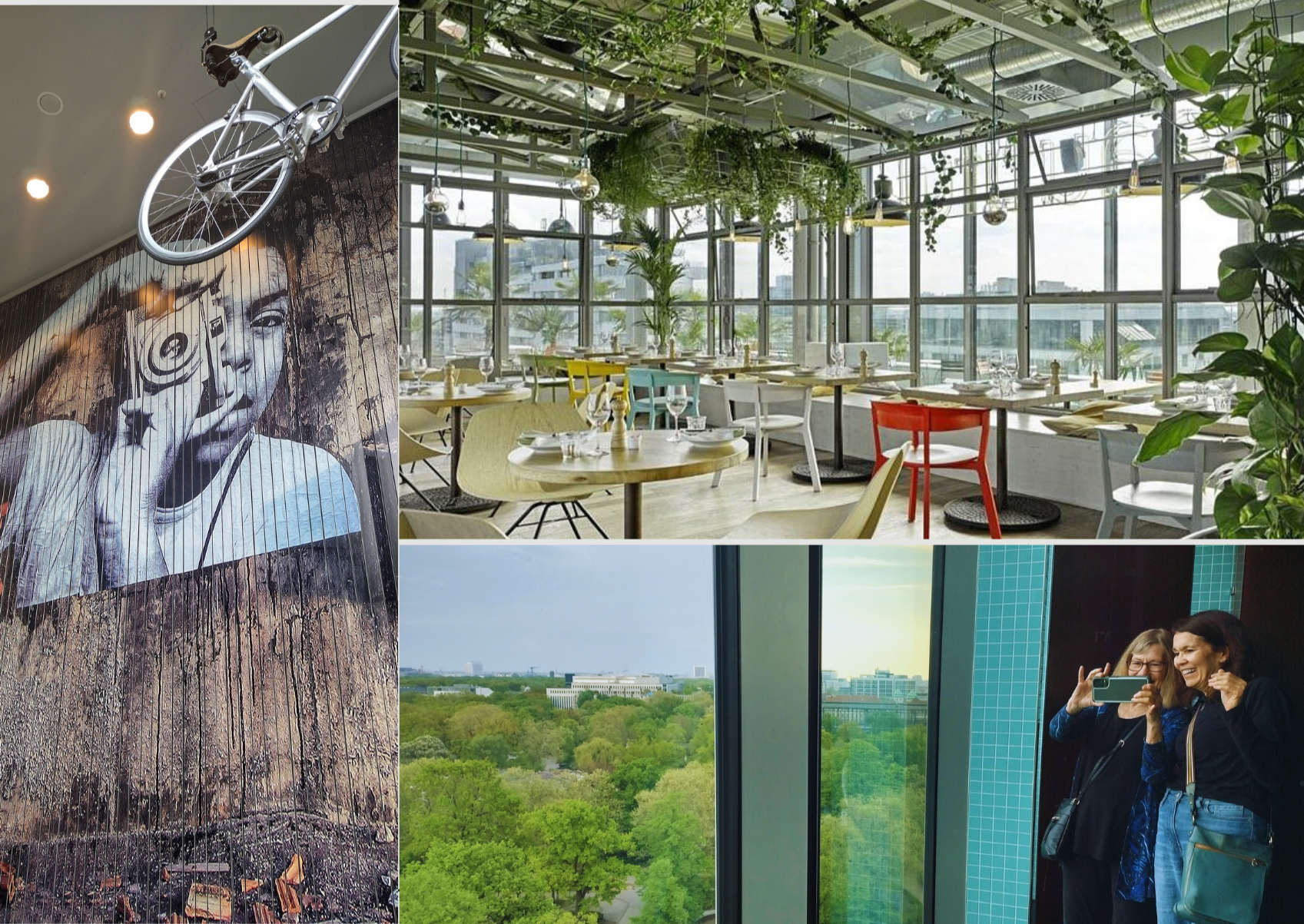
The hip, artful entry to 25 Hotel; Neni Berlin, photo courtesy of Trip Advisor; friend Denise and me taking a pic in the bathroom mirror overlooking the zoo!
In part, Kerstin and Frank chose this special spot because they hoped we’d enjoy the Mediterranean/European cuisine served up by restauranteur Haya Molcho and family, who have roots in Tel Aviv. But the main attraction was the view because Neni is surrounded by an open-air balcony that looks down upon Berlin’s wooded Tiergarten (Zoo) and across the city. While I was admiring the tree canopy and trying to spot a monkey or bird, Frank pointed to the Rathaus Schöneberg less than two miles away. “That’s where your brother saw Kennedy’s Ich bin ein Berliner speech,” he said to my husband. Pat’s oldest brother was a Green Beret when JFK travelled to West Berlin in June 1963 as a show of strength against the Soviet Union, whose daunting 96-mile wall had been constructed less than two years earlier. So much history…
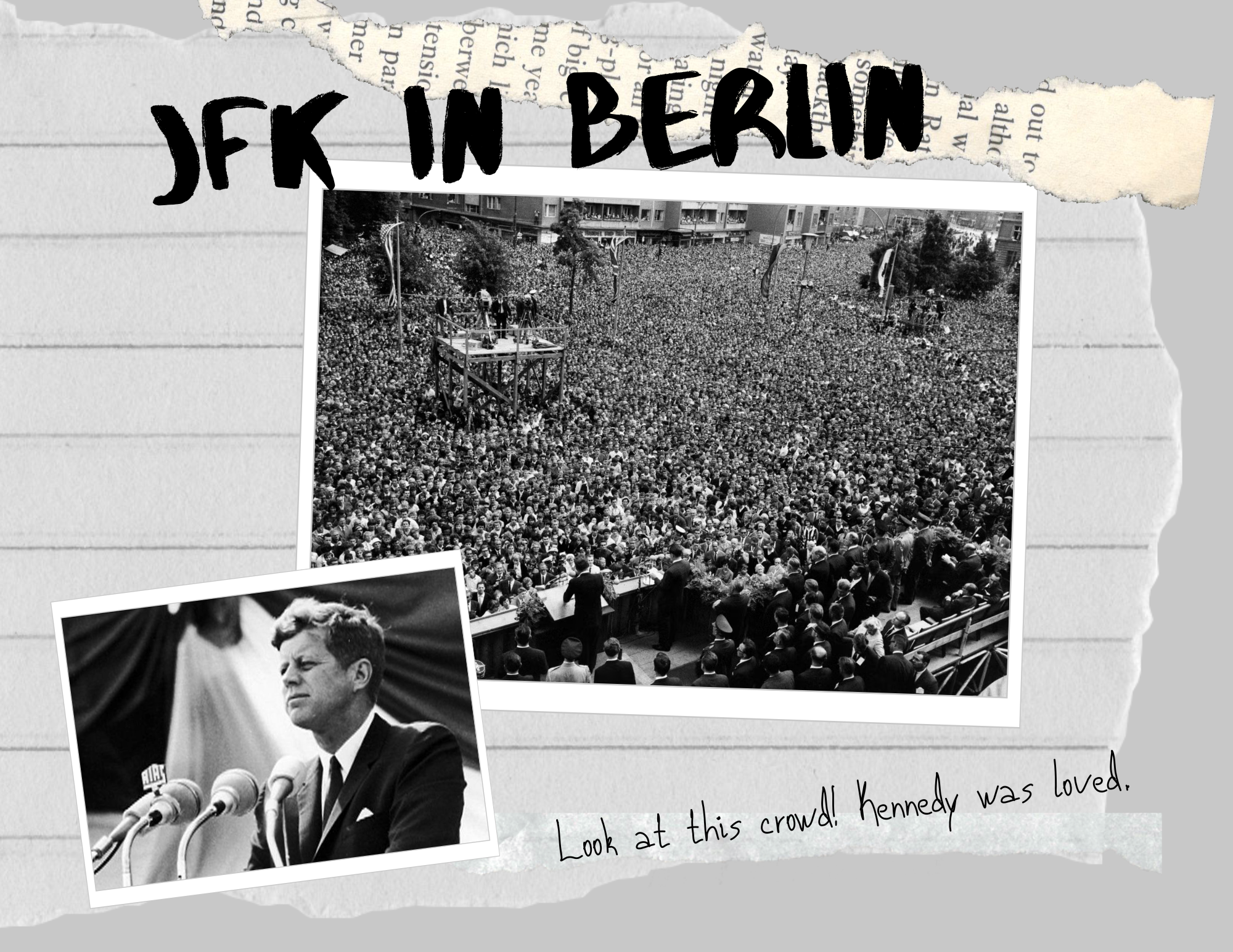
At least 120,000 people came to see America’s President in Berlin in 1963. Some estimates put the crowd at half a million.
At dinner, our old friends, Denise and Rich, and our new friends, Kerstin and Frank, engaged with us in a lively discussion of global affairs, all of us troubled by signs of unrest and authoritarianism at our respective homes. Just as it had been difficult to leave Kerstin’s parents in Frankfurt, it was again hard to part ways. As we said Auf Widersehen, Kerstin handed me a Berlin Bear keyring charm, a keepsake I will always cherish.
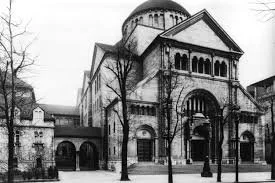
As we wandered home, I found myself wondering if there was much of a Jewish community in Charlottenburg. The answer was sobering: 13,000 Jewish residents from Charlottenburg-Wilmersdorf were deported and killed by the Nazis. If we had roamed the neighborhood streets, we might have passed 2,600 Stolpersteine (stumbling stones) laid outside their last residences. That’s more than a quarter of the total number in the entire city of Berlin. Just blocks from where we enjoyed dinner, there had been a stately synagogue with a liberal congregation, burned beyond repair during the November 1938 pogrom. It’s a good thing we had one final day in Berlin to unwind.
Join me next time for a leisurely stroll through the charming, trendy neighborhood of Prenszlauer-Berg before we head off to Schwerin and its fairytale castle, and Hamburg, where my mother lived as a young girl.
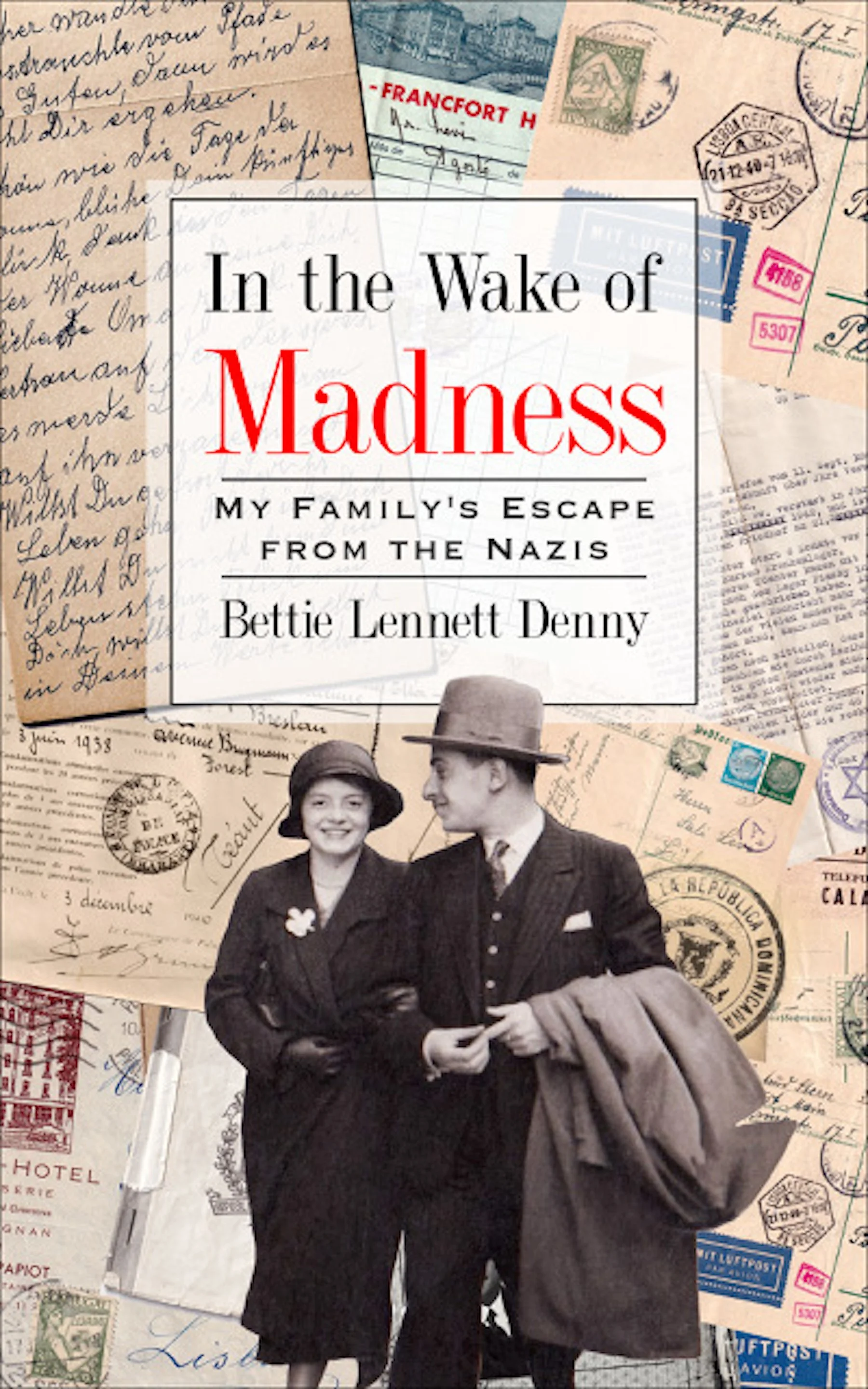
As we head into the holidays, please consider buying a gift copy of my book, In the Wake of Madness: My Family’s Escape from the Nazis. It’s a riveting, relevant and hopeful story for the times in which we live. Click here to purchase through Amazon. Thanks!